| BLOOM | USDA ZONES | BLOOM COLOR |
|---|---|---|
|
|

|
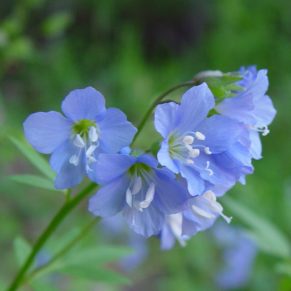
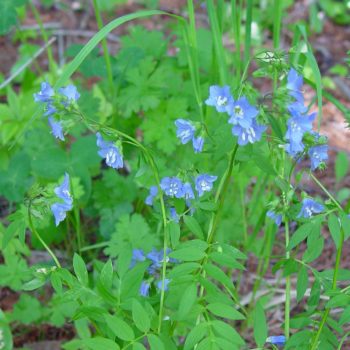
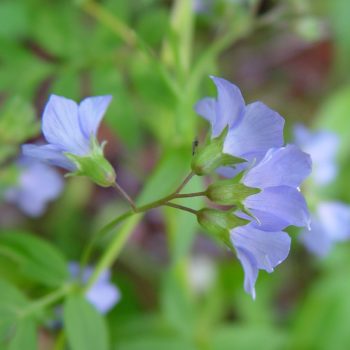
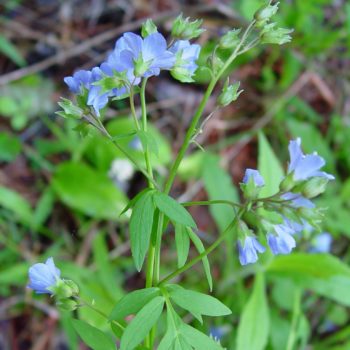
Jacobs Ladder is a graceful native perennial admired for its soft clusters of pale blue to lavender flowers that bloom in mid to late spring. The blossoms rise above fern-like foliage made of evenly spaced leaflets, giving the plant its distinctive ladder-like appearance. Its airy form, gentle color, and tidy clumping habit make it a favorite for woodland gardens, shaded borders, and naturalized plantings. Elegant, resilient, and ecologically valuable, Jacobs Ladder adds texture and early-season beauty to cool, moist landscapes.
Jacobs Ladder grows best in partial shade to light sun and prefers medium to moist, well-drained soils, thriving especially in loamy or humus-rich woodland sites. It tolerates brief dry periods once established but performs best with consistent moisture and protection from harsh afternoon sun. Maintenance needs are low, and the plant forms neat clumps that spread slowly without becoming invasive.
Overall height at 1–2 feet.
Jacobs Ladder serves as a host plant for several native moth larvae, and while butterfly use is limited, it is known to support caterpillars of species such as the Northern Pearly-eye and Cabbage White, which occasionally utilize related woodland plants. Its nectar-rich flowers attract early-season bees, butterflies, and hummingbirds, offering vital resources when few other plants are in bloom. The plant’s foliage and low growth habit also provide shelter for ground-dwelling insects in woodland ecosystems.
Historical accounts note that plants like Jacobs Ladder were used by Indigenous peoples in traditional herbal preparations, including teas and topical applications for minor ailments. These uses reflect cultural tradition rather than modern medical guidance and should be understood as historical context rather than recommendation.
Jacobs Ladder provides strong wildlife value by supporting early pollinators, offering habitat structure for insects, and contributing to the ecological diversity of woodland and shaded meadow environments. Its adaptability and early bloom time make it an important species for sustaining beneficial insects at the start of the growing season.
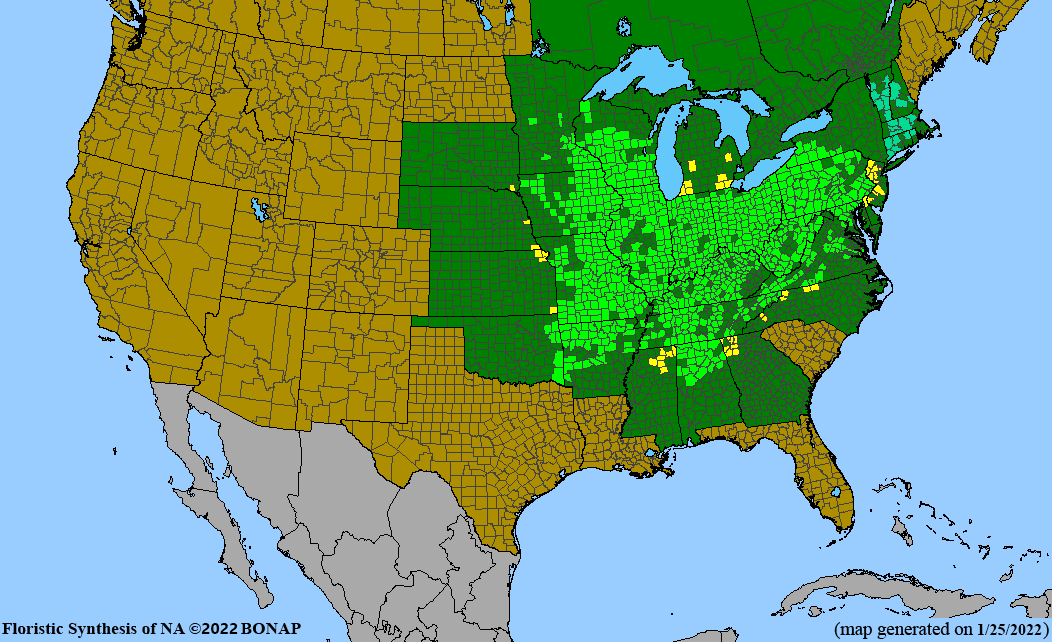
| Unreported | |
 | Unreported (Absent for area) |
| Native | |
 | Native in state (NA Native and Present in state, but not Present in county) |
 | Native in state and Present in county (NA Native and Present in state, and Present in county) |
 | Rare in state and Present in county (NA Native and Rare in state, and Present in county) |
 | Extirpated/Historic in state/Native (NA Native and Reported in county) |
 | Adventive or Introduced state (NA Native and Adventive in state, and Present in county) |
| Exotic Occurrences | |
 | Exotic in state (Exotic and Present in state, but not Present in county) |
 | Exotic in state and Present in county (Exotic and Present in state, and Present in county) |
| Other | |
 | Noxious in state (Noxious in state, and Present in county) |
 | Questionable Presence (cross-hatched) |
Jacobs Ladder grows best in partial shade to light sun and prefers medium to moist, well-drained soils, thriving especially in loamy or humus-rich woodland sites. It tolerates brief dry periods once established but performs best with consistent moisture and protection from harsh afternoon sun. Maintenance needs are low, and the plant forms neat clumps that spread slowly without becoming invasive.