| BLOOM | USDA ZONES | BLOOM COLOR |
|---|---|---|
|
|

|
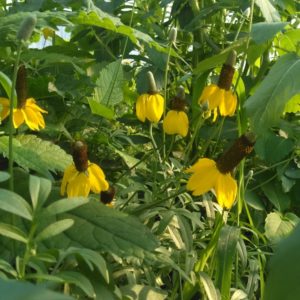
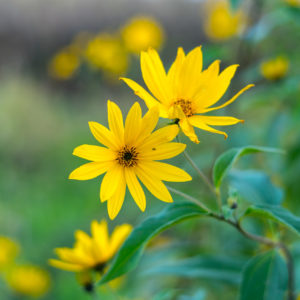
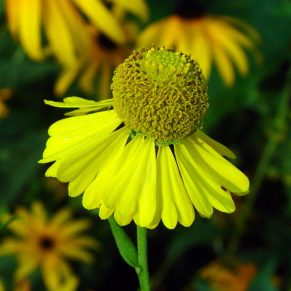
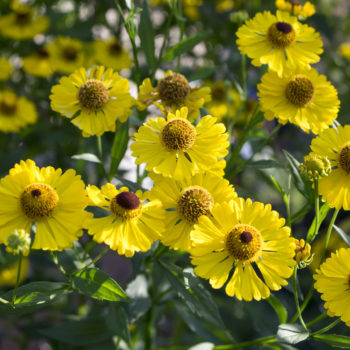
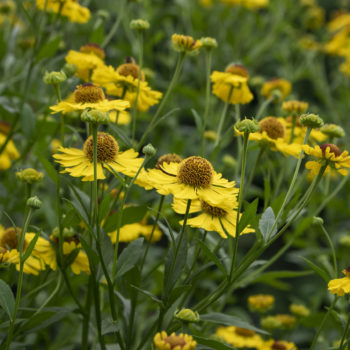
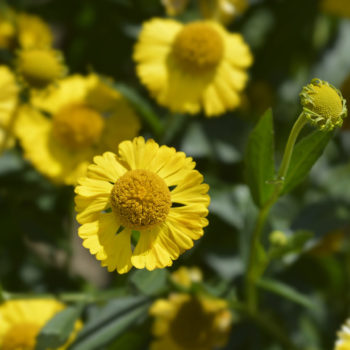
Sneezeweed is a bright, late-season native perennial known for its golden-yellow, daisy-like flowers with distinctive domed centers. The blooms appear in abundance from late summer into fall, creating a vibrant display in meadows, prairies, and moist garden borders. Its winged stems and neatly toothed leaves give it a refined, upright form that holds its color when many other perennials are fading. Long-blooming, sturdy, and highly attractive to pollinators, Sneezeweed brings warm, glowing color to late-season landscapes.
Overall height at 3–4 feet.
Sneezeweed serves as a host plant for several native moth larvae, and while butterfly use is limited, species associated with moist, sunny habitats may occur where it grows. No butterfly species are confirmed to use Sneezeweed as a primary caterpillar host, though butterflies such as the Pearl Crescent, Phyciodes tharos, and the Silvery Checkerspot, Chlosyne nycteis, may be found in the same environments. Its nectar-rich flowers attract monarchs, swallowtails, skippers, native bees, beetles, and pollinating flies, making it an important late-season resource for many insects.
Historical accounts note that plants like Sneezeweed were used by Indigenous peoples and early herbalists in powdered preparations and teas, though the plant is known to be toxic if ingested in quantity. These uses reflect cultural tradition rather than modern medical guidance and should be understood as historical context rather than recommendation.
Sneezeweed provides exceptional wildlife value by supporting pollinators, offering habitat structure for insects, and enriching the ecological diversity of prairies, meadows, and wetland edges. Its long bloom period, resilience, and ecological importance make it a key species for sustaining beneficial insects in sunny native landscapes.
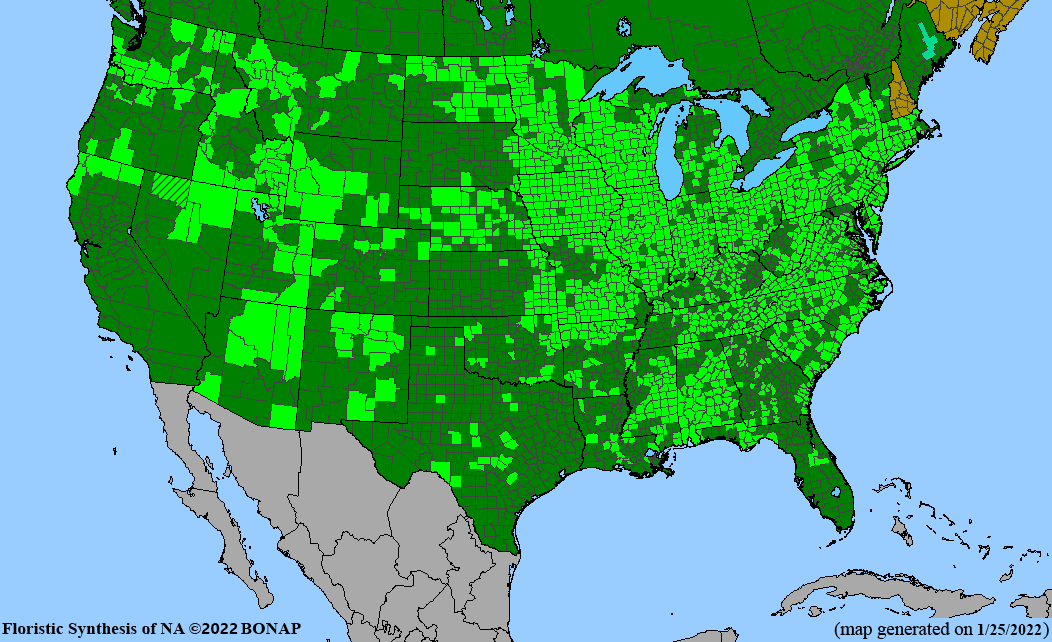
| Unreported | |
 | Unreported (Absent for area) |
| Native | |
 | Native in state (NA Native and Present in state, but not Present in county) |
 | Native in state and Present in county (NA Native and Present in state, and Present in county) |
 | Rare in state and Present in county (NA Native and Rare in state, and Present in county) |
 | Extirpated/Historic in state/Native (NA Native and Reported in county) |
 | Adventive or Introduced state (NA Native and Adventive in state, and Present in county) |
| Exotic Occurrences | |
 | Exotic in state (Exotic and Present in state, but not Present in county) |
 | Exotic in state and Present in county (Exotic and Present in state, and Present in county) |
| Other | |
 | Noxious in state (Noxious in state, and Present in county) |
 | Questionable Presence (cross-hatched) |
Sneezeweed grows best in full sun and prefers medium to moist soils, thriving especially in loamy or clay-loam sites that retain consistent moisture. It performs well in rain gardens, wet meadows, and along pond edges, though it can adapt to average garden soils that do not fully dry out. The plant forms upright clumps that remain sturdy without staking and may self-seed lightly in suitable habitats.